Why Balanced Rooms Feel Right Instantly
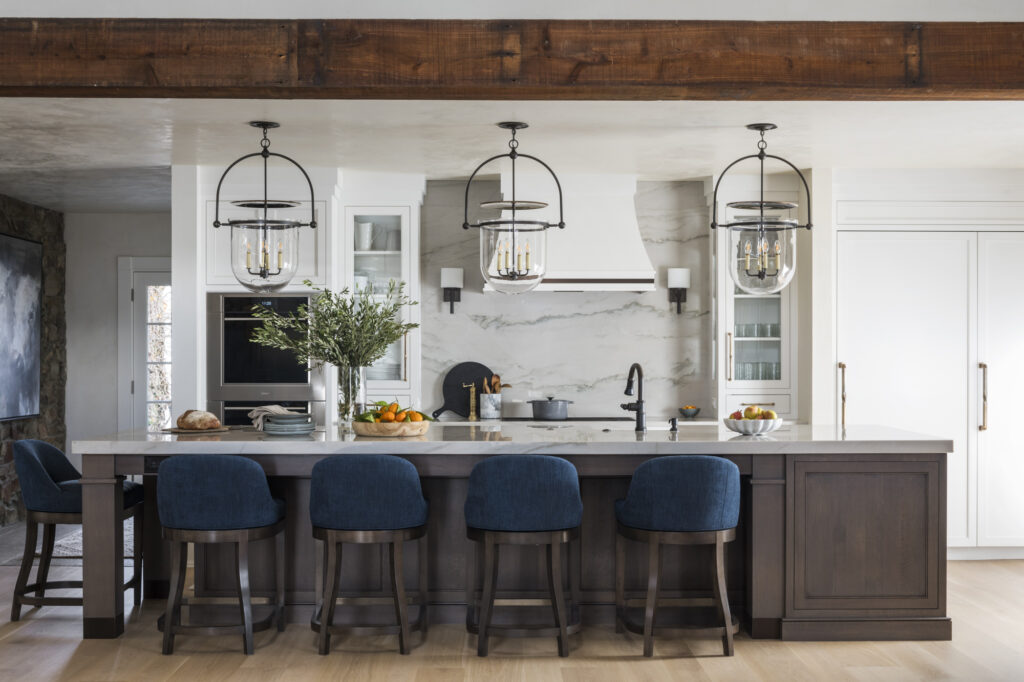
I remember standing in the kitchen of our New Hope farmhouse project at a moment when the work was still in progress, when cabinetry had been installed but the room had not yet been softened by the presence of lighting fixtures, stools, or the quieter layers that come later, and yet there was already a sense of ease to it. The light moved naturally across the space, filtering in through both the windows and the skylight, and the room felt inherently settled. It’s often in these unfinished moments, when nothing has been styled and still everything feels resolved, that the truest measure of a space reveals itself.
That feeling is what people tend to describe as balance, though it rarely comes from a single decision or a final adjustment at the end. It begins much earlier, through a series of considered choices that guide how a space is experienced long before it is fully complete.
It Begins with How a Room Is Reimagined
That New Hope farmhouse carries with it a long and layered history, originally built in 1771 and expanded gradually over time, with additions on either side of the main structure that reflect different moments in its life. When we were brought in, our work focused on the family room, kitchen, and pantry, and the question was not simply how to update these spaces, but how to allow them to function more clearly while maintaining a sense of continuity to the home as a whole.
We spent time understanding how the rooms wanted to feel and flow, recognizing that a sense of openness with the natural light could be accentuated by our design. From there, decisions began to take shape more intuitively. Crisp white cabinetry with glass fronts allowed that light to travel more freely, while the quartzite slab backsplash introduced movement and depth without competing for attention. Even the reconfiguration of the appliance layout was part of this same conversation, ensuring that the room would not only feel composed, but would also support the way our clients move through it each day.
None of these choices exist in isolation. Together, they begin to create a room that feels settled well before it is ever finished.
When Function and Feeling Align
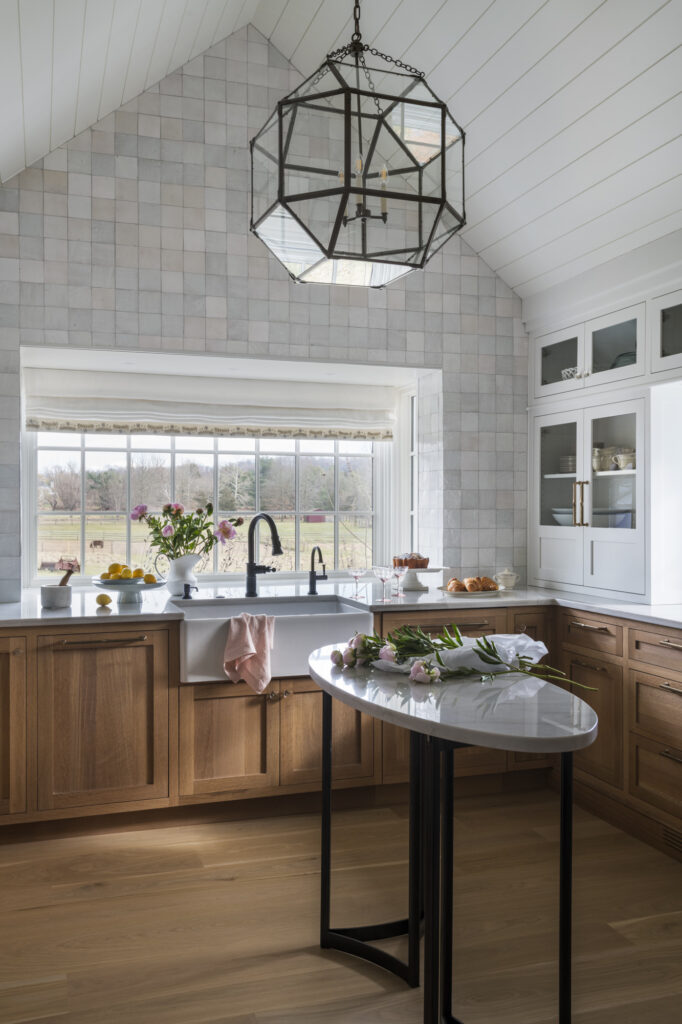
One of the spaces I return to often in that home is the pantry, which has windows on three sides and offers views both toward the drive and out across the farm, creating a quiet connection to the landscape beyond. A bay window that naturally draws your eye, framed by a mosaic tiled wall that becomes a focal point without ever feeling overstated, and beneath it, the farmhouse sink sits in a way that feels both practical and considered.
What makes the space memorable is not any single feature, but the way everything has been allowed to relate to one another. The concealed coffee bar, with its antiqued mirrors inset into arched cabinetry panels, feels integrated rather than decorative, and the layering of texture and pattern throughout the room adds warmth without introducing visual noise. The result is a space that supports daily routines while still offering moments of beauty, where function and feeling come into alignment in a way that allows the room to fully settle into itself.
When Proportion Becomes Intuitive
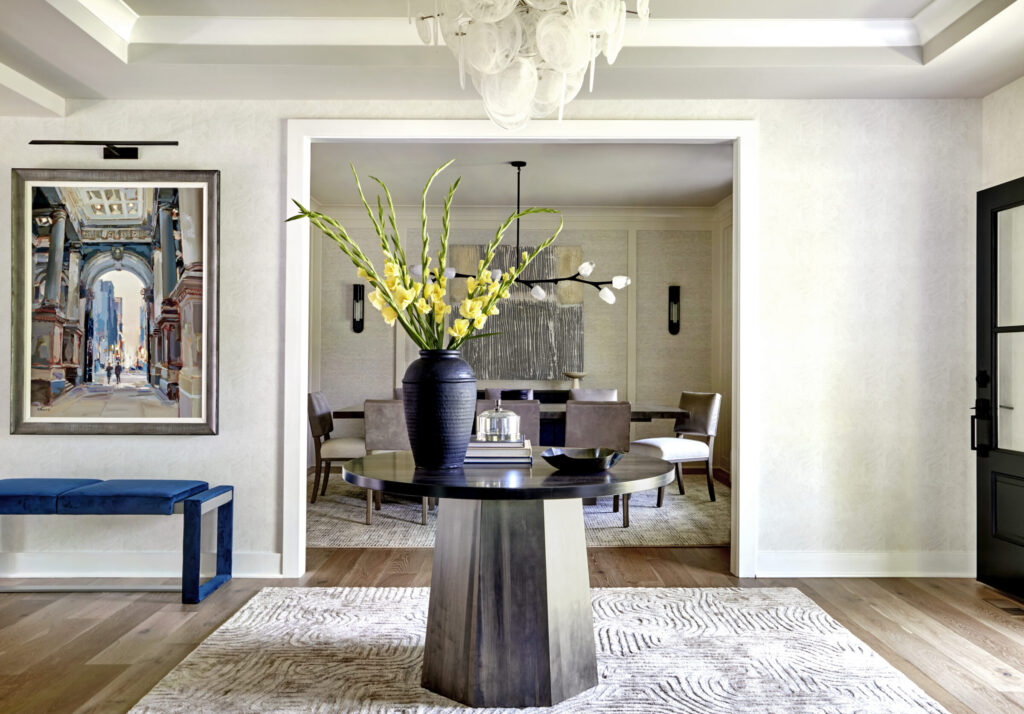
In another Bucks County project, the conversation unfolded differently, though the underlying principles remained consistent. This was a ground-up modern farmhouse designed to bring together two families, and from the outset there was a shared desire for something that felt sculptural, expressive, and slightly unexpected, which allowed us to approach the interior with a broader creative range.
We approached the interior finishes as the foundation for everything that followed, looking closely at how they supported the architecture and the overall character of the home, and how that language could be carried forward in a way that felt cohesive. That thinking extended naturally into the furnishings, where form was considered just as carefully as function, and each piece was selected for its presence and the way it related to the surrounding elements. Rather than simply filling the rooms, the goal was to create a composition where everything felt connected, allowing the spaces to take shape with a quiet sense of order. As those layers came together, the scale of each element began to resolve intuitively, emerging as a natural extension of the home itself rather than something imposed upon it.
When a home has that kind of clarity, proportion becomes something you feel rather than something you measure.
Harmony Without Repetition
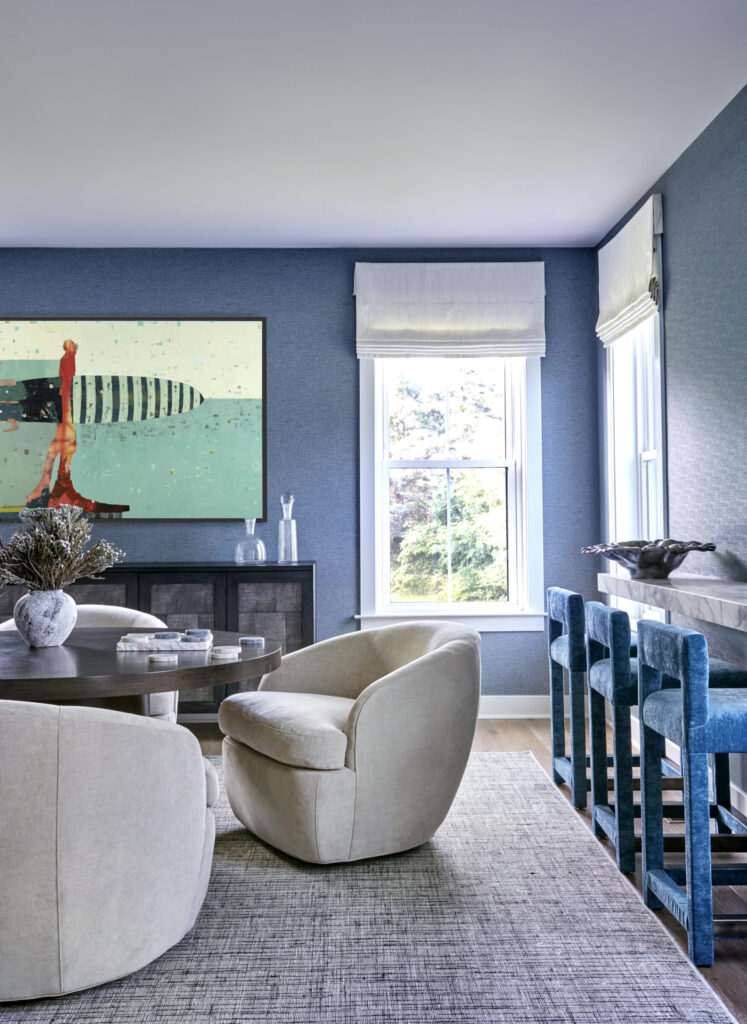
Some of the most compelling moments in that Bucks County home come from contrast, where contemporary elements sit comfortably alongside materials that feel more organic and grounded. This interplay creates a sense of movement within the space, without disrupting the overall composition. The goal was never symmetry, but connection, ensuring each decision relate to the next even when the elements themselves are distinct.
This approach extended beyond the interior as well, as we worked closely with the landscape architect to ensure that the outdoor living and dining areas, along with the pool cabana, felt like a continuation of the home rather than a separate experience. By aligning the materials and maintaining a consistent design language, the transition between inside and out becomes fluid, allowing the home to feel cohesive in a way that is experienced rather than observed.
Where Thoughtful Choices Take Hold
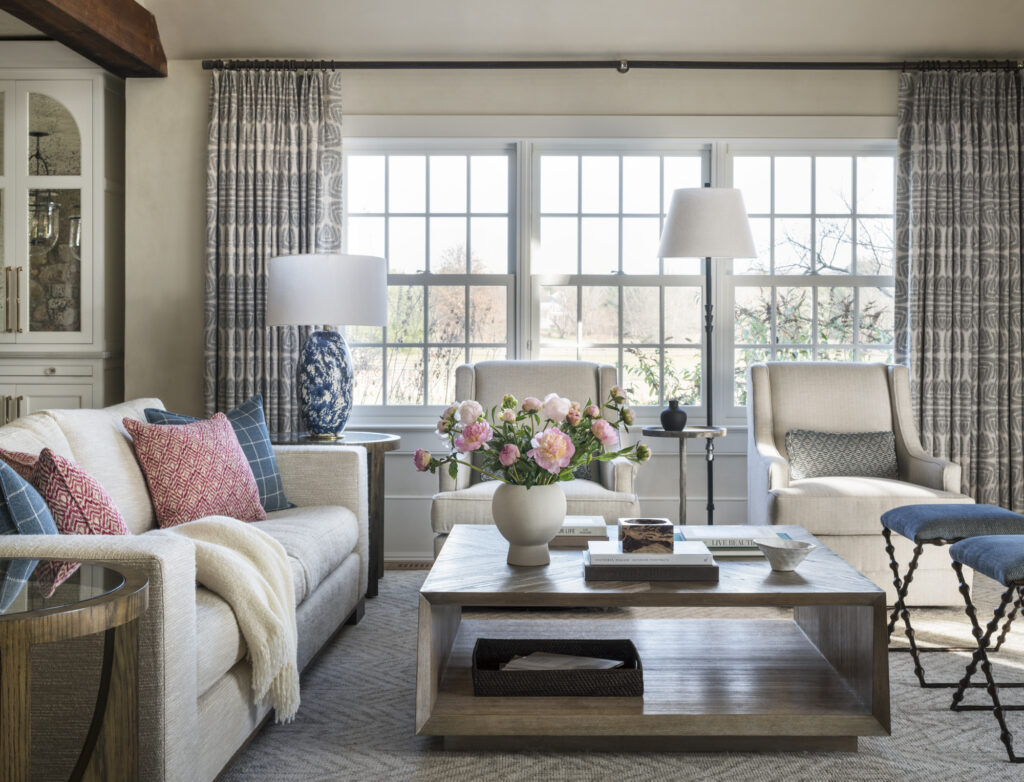
Over time, I have come to understand that the rooms which feel the most complete are rarely the ones that were adjusted at the end, but rather the ones that were considered carefully from the beginning, where each decision builds on the last in a way that feels deliberate without ever becoming rigid.
In New Hope, that meant layering texture and pattern in a way that introduced warmth while maintaining a sense of lightness, allowing the space to feel both refined and welcoming. In Bucks County, it meant embracing materials and forms that reflected our clients’ desire for something distinctive, while still ensuring that the home would feel grounded and enduring over time.
These are not decisions that call attention to themselves. They gather over time, shaping the experience of the room until everything begins to feel fully aligned.
Where It All Comes Back Into Focus
I still think about that moment in the New Hope kitchen, standing in a space that was not yet complete and recognizing that it already felt resolved, the quiet confirmation of what we are always working toward, even when it is not immediately visible.
A room should feel immediately at ease, settled in a way that allows you to move through it easily, to live within it comfortably, and to return to it without hesitation.
When that happens, balance is no longer something you seek out. It becomes something you simply feel.
- – Glenna